Traditional Chinese Decorative Oriental Graphics
First Impressions and Brand Personality
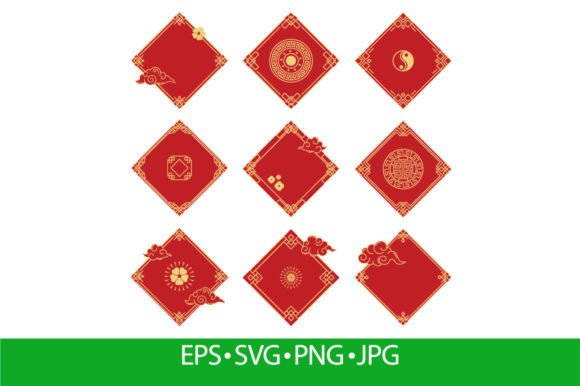
The Traditional Chinese Decorative Oriental graphics immediately evoke a sense of cultural richness and historical depth. The intricate patterns and ornate frames suggest a brand that values tradition, craftsmanship, and authenticity. This design asset feels both elegant and festive, making it ideal for businesses that want to connect with customers on an emotional level. It suggests a brand personality that is sophisticated yet approachable, decorative yet meaningful.
Fitting Business Types and Use Cases
This graphic design asset works particularly well for small businesses in the food, home decor, and handmade sectors. Imagine using it for a boutique bakery or a seasonal candle brand. The ornamental elements can enhance product packaging, add visual interest to social media graphics, and create a cohesive brand identity that stands out in a crowded market.
- Bakery: Use the Traditional Chinese Decorative Oriental illustrations on menu cards, packaging labels, and promotional banners.
- Skincare Brand: Incorporate the design into product mockups, website banners, and digital marketing visuals.
- Handmade Soap Business: Apply the graphics to gift boxes, thank-you cards, and branded stickers.
- Florist: Use the ornamentation as accents on signage, business cards, and seasonal displays.
Design Asset Versatility
The Traditional Chinese Decorative Oriental offers a wide range of applications in both print and digital formats. With EPS, SVG, and PNG options available, it's highly versatile for different design needs. Whether you're creating a logo design, branding materials, or social media graphics, this asset provides a strong foundation for visual storytelling.
For packaging design, the decorative frames can serve as accents on product labels or as part of the overall box design. In web design, the illustrations can be used as background elements or as part of a Canva template to enhance user experience. The asset also supports editorial design by offering rich visual content that can be integrated into blog posts, newsletters, and promotional materials.
Supporting Business Presentation
Using the Traditional Chinese Decorative Oriental in your brand identity can significantly enhance the overall presentation of your business. It helps create a stronger first impression, which is crucial in retail environments where visual appeal plays a key role. The design asset contributes to better product recognition by providing a consistent visual language across all touchpoints.
By maintaining a clear visual hierarchy, the graphics help guide the viewer's attention to important information such as pricing, product features, and brand messaging. This consistency reinforces brand identity and builds customer trust over time. The asset also improves shelf appeal, especially for local businesses looking to stand out in physical stores or online marketplaces.
Where It Works Best
The Traditional Chinese Decorative Oriental shines in areas where visual flair and cultural relevance are valued. It excels in product labels, packaging accents, hero graphics, and promotional banners. For a handmade soap business, using the design on a thank-you card can add a personal touch that resonates with customers. Similarly, it can enhance seasonal packaging, making it feel more special and memorable.
In boutique visuals, the design asset adds a layer of sophistication and uniqueness that aligns with the brand's aesthetic. On social media campaign graphics, the traditional elements can create a sense of celebration and community, encouraging engagement and interaction.
Where to Use with Caution
While the Traditional Chinese Decorative Oriental is a powerful tool, it should be used thoughtfully in certain contexts. Avoid applying it to formal corporate branding where simplicity and minimalism are preferred. It may also not be suitable for very small labels where the design could overwhelm the text.
On crowded product packaging, the intricate details might compete with essential information such as ingredients or usage instructions. In layouts that require high readability, ensure that the design does not obscure critical content. Additionally, when working with luxury minimalist brands, the ornate style may clash with the desired aesthetic.
Practical Brand Designer Notes
As a brand designer, it's important to test the Traditional Chinese Decorative Oriental on real packaging mockups to see how it performs in context. Always check black and white usage to ensure the design remains effective in monochrome settings. Preview the asset on small labels to confirm scalability and legibility.
Test the design with your brand colors to ensure compatibility and cohesion. Compare it with competitor packaging to maintain a unique visual identity. Check print quality to avoid issues with resolution or color accuracy. Review PNG transparency and inspect SVG or vector editability when relevant for future customization.
Finally, confirm the commercial license before using the asset for client work, business branding, or physical product sales. Ensuring proper licensing is essential for both legal compliance and professional credibility.