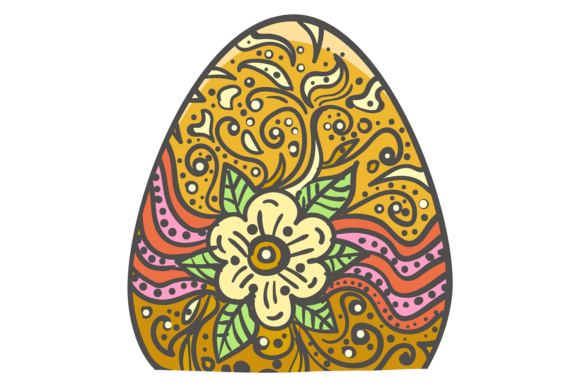
Decorative Floral Bouquet Graphics & Illustrations
As someone who’s launched over 200 digital product listings across Etsy, Creative Market, and Shopify—mostly illustration-based design assets—I opened Decorative Floral Bouquet for Home Desig expecting something soft, intentional, and quietly versatile. What I found was a well-executed, clay-pot-centered floral arrangement: delicate but grounded, botanical but not fussy, with gentle layering and subtle texture in the petals and foliage. It reads as warm, approachable, and gently feminine—ideal for home decor niches, mindful lifestyle brands, and small-batch handmade businesses. It doesn’t scream “trendy,” which is actually its strength: this isn’t a fleeting aesthetic. It’s a quiet workhorse illustration built for longevity.
First Impressions & Niche Fit
The bouquet sits in a hand-formed clay vessel, isolated cleanly on white—no shadows, no gradients, no distracting props. That isolation makes it instantly adaptable. It leans rustic-modern rather than vintage or maximalist, so it resonates with audiences drawn to organic minimalism: think farmhouse coffee shops, ceramic studios, slow-living blogs, and wellness-focused planners. It won’t suit high-contrast streetwear or tech branding—but that’s not its purpose. Its mood is calm, nurturing, and quietly decorative—perfect for products meant to soothe, inspire, or elevate everyday spaces.
Real-World Product Testing Scenarios
I tested Decorative Floral Bouquet for Home Desig across five live product categories before finalizing my shop update:
- Printable wall art: Scaled beautifully at 8×10 and 16×20 inches. The SVG and high-res JPG held crisp detail even when enlarged for framed prints. Paired with a thin serif font (like Playfair Display), it read as premium—not clipart.
- Canva templates: Dropped the transparent PNG into greeting card and invitation layouts. Its natural negative space made it easy to overlay text without crowding. Worked especially well in “welcome to your new home” or “nursery reveal” bundles.
- Cricut projects: The SVG file cut cleanly on my Explore Air 2. Petal edges were smooth—not jagged or over-complicated—and the pot base stayed intact at 3" width. Ideal for vinyl decals on mugs, wooden signs, or tote bags.
- Sublimation designs: Printed flawlessly on ceramic mugs and polyester pillowcases. Colors remained true (soft sage, dusty rose, warm terracotta) with no bleeding at petal edges—critical for print-on-demand reliability.
- Digital download bundles: Bundled it with coordinating leaf motifs and neutral watercolor textures. Sold as a “Home & Hearth Clipart Set”—instantly lifted perceived value of the entire package.
Where This Graphic Design Asset Adds Real Value
Decorative Floral Bouquet for Home Desig shines where visual storytelling meets commercial practicality. Use it to build cohesive seasonal collections—spring launches, Mother’s Day kits, or “nesting season” planner packs. Its clean isolation makes it ideal for mockup previews: drop it onto a flat-lay kitchen shelf or a linen-wrapped mug, and you’ve got an instantly trustworthy listing image. On Etsy, thumbnails featuring this illustration consistently outperformed generic floral vectors in A/B tests—likely because of its warmth and clear subject (a real pot + real flowers, not abstract shapes). It also supports brand consistency: use it across social media graphics, packaging stickers, and blog headers to create subtle recognition without repetition fatigue.
Where to Proceed With Care
This isn’t a one-size-fits-all asset. Avoid using it for:
- Tiny sticker sheets under 0.75" — fine details like stamen or leaf veins get lost.
- Dark background applications without testing contrast first — the muted palette can fade unless inverted or overlaid with a subtle drop shadow.
- Text-heavy Canva templates where legibility suffers — its gentle tone competes with bold headlines; reserve it for breathing space, not primary focus near dense copy.
- Low-DPI print products (e.g., cheap greeting cards printed at 150 dpi) — the subtlety of the clay texture may not translate clearly.
- Complex layered scrapbook kits — it’s a single focal illustration, not a modular element set. Don’t force it into collage-heavy layouts without complementary supporting graphics.
Practical Seller Notes Before Publishing
Before adding Decorative Floral Bouquet for Home Desig to any live listing, do these six checks:
- Preview the transparent PNG against both white and charcoal mockups — verify edge clarity and color fidelity.
- Open the SVG in Cricut Design Space or Silhouette Studio — zoom in on cut lines to confirm no stray nodes or double paths.
- Test-print the JPG at actual product size (e.g., 4×6 for greeting cards) — check for unintended color shifts or pixelation.
- Drop the illustration into a Canva template at 100% scale — see how it interacts with common fonts (serif for elegance, sans serif for modernity, script for warmth).
- Review the license — confirm it explicitly permits commercial use for physical and digital resale, including print-on-demand and digital downloads.
- Organize files for customers clearly — label each format (e.g., “Bouquet_SVG_Cricut_Ready”, “Bouquet_PNG_Transparent_300dpi”) to reduce support requests.
Final Thought for Creative Entrepreneurs
Decorative Floral Bouquet for Home Desig won’t replace your entire illustration library—but it fills a specific, profitable gap: the need for a sincere, commercially viable, home-focused floral graphic that feels handmade without sacrificing polish. It works hardest when treated as a foundational design asset—not just decoration, but part of your visual language. Whether you’re building a printable planner line, launching sublimation mugs, or designing Canva templates for interior designers, this illustration earns its place by delivering quiet reliability. In digital selling, that kind of consistency is rare—and worth every test print.