Decorative Cactus Plants in Terracotta P Graphics
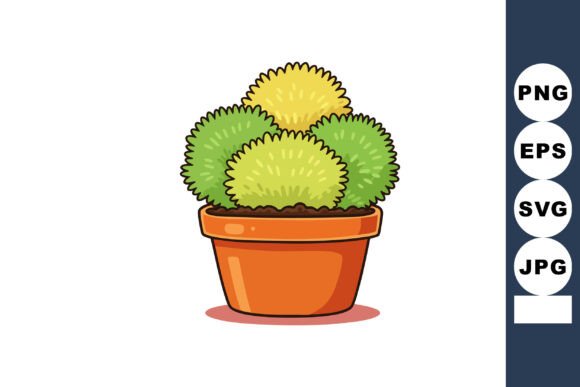
As a brand designer who’s built visual systems for over 200 small businesses—and as a content marketer who’s launched campaigns across Instagram, Pinterest, email, and print—I opened Decorative Cactus Plants in Terracotta P expecting charm. What I got was strategic versatility: a cheerful, grounded, sunlit mood that lands instantly. The vector illustration shows decorative cactus plants in a terracotta pot with green and yellow tones—warm but not saccharine, organic but not chaotic. It feels handmade without sacrificing polish, and it reads as lifestyle-forward while staying commercially flexible.
A First Impression That Builds Audience Trust
This isn’t just clipart—it’s a graphic design asset engineered for emotional resonance. The terracotta pot grounds the composition; the cacti add playful asymmetry and gentle texture. Yellow accents spark energy without overwhelming, and the clean vector lines ensure crisp scaling across formats. For brands targeting wellness, home decor, gardening, sustainable living, or mindful entrepreneurship, this illustration signals approachability, authenticity, and care—three pillars of modern small business branding. It doesn’t scream “discount” or “trendy.” It whispers “thoughtful,” “rooted,” and “ready to grow”—which builds audience trust before a single word is read.
Where Decorative Cactus Plants in Terracotta P Delivers Real Marketing Value
I recently used it for a digital product launch: a printable self-care planner for plant-loving creatives. Here’s how it performed across touchpoints:
- Social media graphics: Scaled beautifully as an Instagram post background—softened with 15% opacity behind bold sans serif headlines. No visual clutter, no competition with copy.
- Pinterest pins: Stood out in crowded feeds thanks to its warm contrast and clear negative space—ideal for editorial design and content marketing thumbnails.
- Email banners: Paired with a muted sage brand color, it elevated a simple promo into something feel-good and cohesive—not generic stock.
- Printable design: Printed flawlessly on kraft paper inserts for planner packaging—no pixelation, no color bleed. The SVG and EPS files made resizing for labels and stickers effortless.
- Canva templates: Dragged straight into branded Canva kits. Worked equally well with script fonts (for headers) and geometric sans serifs (for body text), proving strong visual hierarchy support.
It also strengthened brand identity consistency—not as a logo, but as a recurring decorative element across web design, digital ads, and lead magnets. When repeated subtly in corner accents or section dividers, it became a quiet signature—like a visual “hello” your audience begins to recognize.
Smart Placement: Hero Graphics, Not Hero Headlines
Decorative Cactus Plants in Terracotta P shines where warmth and tone matter most: hero graphics for blog posts about slow living, campaign headers for spring product launches, branded templates for coaching programs, packaging accents for eco-friendly goods, and promotional banners for digital product bundles. Its cheerful mood lifts editorial layouts without distracting from core messaging. It’s especially effective in marketing visuals meant to evoke calm confidence—think welcome emails, resource library headers, or workshop invitations.
Where to Use It With Intention (Not Assumption)
This isn’t a one-size-fits-all design bundle component. Avoid deploying it in:
- Formal corporate branding (e.g., B2B SaaS pitch decks), where tonal mismatch could dilute credibility.
- Dense information layouts—its charm gets lost in tight grids or data-heavy infographics.
- Small mobile graphics (under 120px wide), where detail flattens and recognition drops.
- Low-contrast backgrounds (e.g., light yellow on pale beige), where the yellow accents vanish.
- Overly minimal brands relying on stark whitespace—here, it can feel visually heavy unless carefully cropped or desaturated.
Remember: illustration supports strategy. If your message is urgent, technical, or high-stakes, let type and color carry weight—save this asset for moments when you want to soften, humanize, or delight.
Pro Brand Designer Notes You’ll Actually Use
Before locking it into your next campaign, do these five things:
- Test it against your full brand palette—especially black, white, and primary accent colors. Does the terracotta hold warmth on dark mode? Does yellow pop—or disappear—next to your secondary hue?
- Check monochrome usage: Convert to grayscale. Does the pot retain shape? Do cacti still read as distinct elements? Crucial for merch, invoices, or B&W printables.
- Drop it into real mockups: Try it inside a Shopify product banner, a Mailchimp header, and a Canva Instagram Story template—not just on white canvas.
- Preview on mobile: Zoom out to 33%. Does it read as “cactus” or just “green blob”? Clarity at scale separates professional branding from filler.
- Compare spacing and balance with your current top-performing visuals. Does it align with your established rhythm—or disrupt it?
And always verify the commercial license. This is a digital product sold on a creative marketplace, so confirm usage rights cover client work, paid ads, and physical merchandise—especially if you’re a designer selling deliverables or a coach bundling branded resources.
Why This Illustration Fits the Creative Entrepreneur’s Toolkit
In a world flooded with AI-generated sameness, Decorative Cactus Plants in Terracotta P stands out because it balances personality with precision. It’s not overly stylized like trendy doodles, nor sterile like AI vectors. It’s a modern design asset with craft in its curves and intention in its palette. For bloggers building a visual voice, designers curating design assets, or small business owners refreshing their packaging design and product label system—it delivers immediate polish, emotional alignment, and cross-platform reliability. Whether you’re designing a sticker sheet, a webinar slide deck, or a seasonal email series, this illustration earns its place—not as decoration, but as deliberate brand language.